Tuesday, 7 February 2023

Major housebuilders are pressing on with applying for planning permission to build more homes despite concerns over the housing market and the wider economy.


Glenigan’s construction research shows that the 10 biggest housebuilders submitted detailed planning applications to build 78,000 new homes last year.

Persimmon led the way with proposals for 13,547 units ranging from plans for 198 houses and flats in Bedford (Project ID: 19188395) to the Burdon Lane development in Sunderland featuring 478 houses and 54 flats (Project ID: 22116884).

Top 10 Private Housebuilders by 2022 planning pipeline

CompanyTotal ApplicationsTotal Units
Persimmon9613,547
Bellway7113,302
Taylor Wimpey6911,843
Barratt7411,149
Redrow547,106
Vistry365,077
Bloor Homes264,748
Miller234,345
St Modwen113,393
Berkeley DeVeer193,248
Source: Glenigan

Bellway grew its planning pipeline by 10% last year with proposals for 13,302 homes including 313 flats at College Way (pictured) in Welwyn Garden City (Project ID: 22189751).
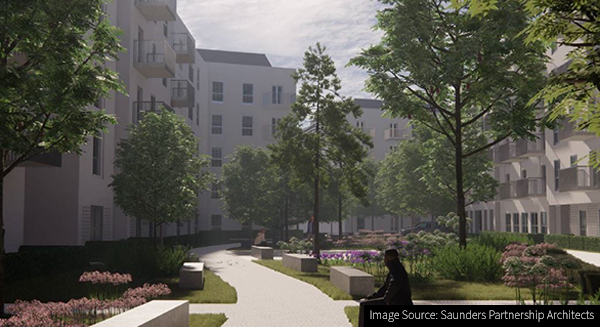
CGI of the new housing development at College Way in Welwyn Garden City

The number of homes in detailed planning applications submitted by Berkeley DeVeer, which owns Avant Homes, surged 28% to 3,248 units ranging from plans for 94 homes at Balderton in Nottinghamshire (Project ID: 17026241) to 150 homes in Walsall (Project ID: 21144894).

St Modwen plans more

St Modwen’s planning pipeline also ballooned as the group embarked on a major expansion programme.

In March 2022, St Modwen, which is owned by investment group Blackstone, outlined plans to double its development programme over the next five years to 2,400 units a year. That ambitious programme is already evident in Glenigan’s data with St Modwen submitting plans to build 3,393 units last year – up from 415 in 2021.

Major St Modwen schemes in the planning system include plans for 205 flats in Longbridge, Birmingham (Project ID: 22288312) and the 1,100 unit West Cheltenham Development (Project ID: 21451969)

Takeover influence

Vistry was ranked sixth after sending in planning applications last year for more than 5,000 homes. This total was boosted by Vistry’s takeover of rival Countryside last November.

Vistry’s overall total included proposals for 1,177 new homes submitted by Countryside, including plans for 119 houses and two flats at Maidstone Road in Ashford, Kent (Project ID: 18035384).

The totals of a number of other residential groups outside of the top 10 were also boosted by takeovers last year according to Glenigan’s market intelligence.

US investment giant Pimco acquired Allison and Larkfleet and the newly enlarged business, trading as Allison Homes, was ranked in 16th position after submitting plans for 1,875 new homes last year. Allison schemes in the planning pipeline include 76 homes at Doddington Lane in Newark (Project ID: 21185535).

Elsewhere, investment group Terra Firma has a pipeline of more than 1,000 homes in planning as it expands its residential development portfolio. In 2021, Tera Firma bought Kier’s housing arm and last year it acquired East Anglian housebuilder Hopkins, which is behind plans for 360 homes at North Walsham (Project ID: 21440810).

Apartments hold up

Overall, Glenigan’s industry research shows that private housebuilders and developers submitted detailed planning applications to build 149,113 new homes last year. This total was down 16% on 2021 as proposals for new houses slumped 19%, but housebuilders are planning to build more flats.

There was an 8% rise in the number of apartments in the planning pipeline, while proposals for retirement homes only fell away marginally, showing that sections of the residential development market remain resilient.

Thursday, 2 February 2023

A Derbyshire builder is going trowel-to-towel with ITV’s Love Island in TV award showdown


Stars of the hit BBC reality show Brickies have raised the roof after learning they are shortlisted alongside ITV show Love Island in this year’s Broadcast Awards.

Far from being ‘mortar-fied’ by the prospect of being pitched against one of television’s most popular shows, the brickies at Derby-based Hodgkinson Builders believe they have laid the perfect foundations for claiming victory.

Brickies, a six-part documentary series following a team of young builders at Pride Park-based Hodgkinson Builders, including some from the Erewash borough, became an overnight sensation when it was first aired on BBC Three last Easter.

It was so popular that a second series was immediately commissioned. Brickies II is set to broadcast this spring, this time promoted to the BBC’s flagship channel BBC One.

The prestigious annual Broadcast Awards, which celebrate the best of British television, take place on February 8th at the Grosvenor House Hotel, in London.  

In addition to Love Island, Brickies is shortlisted against four other contenders in the Best Multichannel Programme category of the awards.

Ilkeston man, Ian Hodgkinson, founder and managing director of Hodgkinson Builders, said: “It’s incredible. We could not believe it when we heard that not only are we shortlisted for a TV award, but we are actually up against the humungous Love Island. 

“What a roller coaster year we’ve had! And who’d have thought that a ‘builder’s bum’ from Derby might be up against the those tanned, bikini-clad beauties on the other show!

“But we know that Brickies offers something a bit different – so maybe it’s not quite the David vs Goliath contest that it might appear.”

Ian puts the success of Brickies down to its honesty, and the fact that, through laughter and tears, it adds a real human perspective to the life of a brickie. 

“The real reason we agreed to do the show in the first place was to hopefully encourage more young people to take up apprenticeships, due to the severe skills shortage in the UK construction industry,” said Ian.

“The success of the show suggests we’ve done some good in that area. As far as we are concerned, just the fact we’ve been shortlisted means we’ve already won, whether or not we manage to clinch the top award next month.” 

Tina Clough, managing director of Poppy PR, which counts Hodgkinson Builders among its list of clients, said: “It doesn’t get much better than this, when one of your clients hits the headlines in such a massive way.

“Some people find Love Island quite shocking in places – but it’s not nearly as shocking as learning that a team of builders from Derby might actually outshine one of the nation’s best-known series.” 

Ian’s team of brickies were so gobsmacked at being nominated alongside Love Island that they agreed to put their own spin on the momentous occasion by donning swimsuits in a tongue-in-cheek photoshoot at MKM Building Supplies in Pride Park, Derby.

Ian added: “They really showed their character. It seemed like a fun idea, but I can’t believe my guys and girls were actually up for it – stripping down on a freezing January morning in Derby. It definitely seemed a million miles from where Love Island is filmed in sun-drenched Majorca!”  

Hodgkinson Builders, which launched in 1990, is no stranger to the limelight. In 2016, Ian led a group of young brickies to Parliament, where they built a wall beneath Big Ben to encourage more young people to consider bricklaying as a career.

Wednesday, 25 January 2023

Mortgage payments could drop by 25% a month in ‘real positive’ for homeowners


Mortgage payments could drop by 25% a month in ‘real positive’ for homeowners

Homeowners and those looking to get onto the property ladder could see their mortgage payments fall significantly by the end of the year.

Monthly mortgage payments may drop by 25 percent within the next 12 months, according to research carried out by Quilter. This comes after the latest Government house price index data showed that the average UK property cost £294,910 in November 2022. Interest rates have risen dramatically within the last year as the Bank of England has hiked the base rate in an attempt to mitigate the impact of inflation.

Mortgage rates for homeowners peaked at six percent in the aftermath of the disastrous mini-budget from former Prime Minister Liz Truss' government.

Anyone who bought a property at this price of £294,910 and mortgage rate with a term of 25 years, with a 80 percent loan to value ratio, will be facing a monthly mortgage payment of £1,520.

This represents a 66 percent increase on the £918 a month mortgage payment for the equivalent property and mortgage deal the year before.

With experts looking ahead to November 2023, if house prices were to drop by eight percent as Halifax forecast and mortgage rates continue on their current downward trend to around four percent, the average UK house price could dip to £283,113.60 Mortgage  payments could drop by 25% a month - ‘real positive’ for homeowners. As a result, monthly mortgage payments would decrease by 25 percent compared to a year before to £1,145. 

Hodgkinson Builders have new  2 bed, 3 bed and 4 bed Homes for sale in Ashbourne right now www.hodgkinsonhomes.com

Thursday, 19 January 2023

House prices see biggest New Year bounce in three years


According to Rightmove

Many home-movers have already been putting their 2023 moving plans into action, with average asking prices seeing the biggest New Year bounce in three years.  The Rightmove monthly House Price Index has the most up-to-date monthly data on asking prices in England, Scotland and Wales, so you are able to see what’s happening in the housing market right now. This month the average asking price of a home in Great Britain rise by 0.9%, to £362,438. 

The price growth follows an uncertain final few months in the housing market in 2022, and two months of price falls in November and December. But average prices are still 2% lower (£8,720) than they were at their record peak in October last year.  

Asking prices usually increase in January, after the traditionally quiet home-moving period leading up to, and during the Christmas period. But this year’s price boost has been the biggest at this time of year since 2020.  

And it seems many home-buyers and sellers are ready to make their move. The 5th January was the third busiest day ever for people asking estate agents to value their home. And in the last two weeks, there’s been a 55% jump in the number of people contacting estate agents about homes listed on Rightmove, compared to the two weeks before.  

Property expert, Tim Bannister, says: “Given that the pause for Christmas came unexpectedly early last year, it was important to see whether buyers and sellers would pick up their plans again at the beginning of this year, or wait to see what the first few months might bring. The numbers certainly suggest that activity has bounced back after Christmas.” 

What’s the outlook for the 2023 housing market?

At the end of 2022, there was uncertainty around how much the property market would be affected by things like rising interest rates, inflation and the increasing cost of living. 

And though it’s early days, there are several signs of positivity as we head into 2023.  

We’re starting to see “familiar trends and a calmer, more measured market after the rapidly changing economic climate of the final few months of last year,” says Tim.  

“However, we expect that the full effect of affordability constraints and last year’s mortgage rate rises will hold back some segments of the market in the first half of the year. But there might be some green shoots of growth that will go on to strengthen in the second half of 2023,” he adds.  

In 2023, we’re forecasting that average asking prices will drop by 2%. To put that into context, this would mean average prices would be where they were in March 2022.

So, what does this mean if you’re thinking of selling?

Demand from home-buyers is down compared to last year’s busiest ever start to a year, but is up by 4% compared to the same period in the last ‘normal’ pre-pandemic market of 2019. 

And while more people have started listing their homes for sale in January, the number of available homes for sale is still well below the levels we’re used to seeing in a more normal housing market.  

However, if you’ve been putting off your plans to move until the New Year, the seasonal monthly increase in new seller asking prices is an encouraging sign.  

Tim says: “The early-bird sellers who are already on the market and have priced correctly are likely to reap the benefits of the bounce in buyer activity, while over-valuing sellers may get caught out as property stock builds over the next few weeks and months, and they experience more competition from other better-priced sellers in their area. Listening to your estate agent’s advice about your hyper-local market and pricing right the first time can avoid a stale sale and the need for even greater reductions later.” 

What are the local experts saying?

Gareth Overton, Head of Residential Sales at Henry Adams, has seen an increase in enquiries from both buyers and sellers at the start of 2023.  

He says: “Across our network of offices, we’ve certainly been cheered by the volume of sales activity immediately following the Christmas break. People are now looking ahead and putting their moving plans into action for the new year. 

Along with increases in viewing levels seen so far in 2023, we’re also receiving more requests for valuations. This bodes well for a reasonably balanced market in the months ahead, where supply and demand are more evenly matched.” 


Sunday, 15 January 2023

Don’t bet in a big fall in house prices

Don’t bet in a big fall in house prices a report in the The Times say;- The final weeks of last year were marked by a succession of negative forecasts 


for the housing market. The consensus is for an 8 to 12 per cent drop in average prices alongside a double-digit decline in sales volumes in

2023. The trebling in mortgage rates over 2022, cost of living pressures, hit to real incomes and recession are all contributors to the gloomy outlook. Yet the outcome may be less cataclysmic than the headlines suggest.

First, the housing market is becoming more equity-driven, with less rellance on borrowers maximising leverage to buy homes. Half of those who bought homes in 2021 used cash or a mortgage less than half the value of the property.

This is a different situation from that in the run-up to 2007, when banks loosened credit conditions to support buyers - households bid up the cost of homes, driving a double-digit overvaluation in housing that exacerbated the price falls over the subsequent downturn. Average house prices tell by 12 per cent between 2007 and 2009 as mortgage availability dried up.

The second point is that the mortgage lending market has transformed thanks to regulations introduced after the global financial crisis. It is harder for borrowers to overextend themselves and the majority of households have had to prove to their bank that they can afford mortgage rates of 6.5 to 7 per cent, even though they might be paying 2 per cent or lower.

Mortgage rates for new business are already tumbling.

Variable-rate loans are about 4 per cent, while fixed rates are closer to 5 per cent, a range that is manageable for homebuyers. First-time buyers looking to purchase a home they rent outside southern England will find their monthly mortgage repayments to be less than the rental costs, even at 5 per cent rates. The challenge remains getting together a deposit that is large enough.

The impact of higher mortgage rates has been overestimated and will not hit the housing market in a uniform way. UK house prices could fall by up to 5 per cent, but the reductions will be concentrated in southeast England, where there is a large equity buffer to absorb price falls. Elsewhere, any price reductions are likely to be modest.

The final point is that the impact of the Covid pandemic is not yet over. Working from home is here to stay, enabling homebuyers to look more widely. The spike in retirement has also supported more home moves, often involving households with small or no mortgages, for whom higher borrowing costs have less of an impact on such decisions.

Cost of living pressures will come to the fore this year.

They will act as a catalyst for moves and support a million home sales in 2023, or maybe surprise us and drive sales volumes higher. These motivations to move are more about necessity than aspiration, which has

tended to support boom and bust in the housing market.

Join in the

conversation at thetimes.co.uk

While there's reason to be more optimistic about the market, it does come with a sting in the tail. House-price growth will be lower for longer as the market adjusts to higher mortgage rates and new generations remain less wealthy than their forebears.

At best house prices will track income growth over the coming years.

A more stable and less volatile market will ensure that we keep the investment flowing into building more homes and a steady flow of finance into the market to support movers.

Richard Donnell is executive director (research) at Zoopla

Wednesday, 4 January 2023

HodgkinsonBuild: Are you seeing the detrimental effects of soaring ...

HodgkinsonBuild: Are you seeing the detrimental effects of soaring ...:   Andrea Fawell, sales and marketing director of WhatHouse? Award-winning property developers Kebbell, reveals what market factors are likel...

Are you seeing the detrimental effects of soaring mortgage rates and reduced mortgage offers in terms of a house price downturn?

 Andrea Fawell, sales and marketing director of WhatHouse? Award-winning property developers Kebbell, reveals what market factors are likely to affect house buyers and developers in 2023 and how confidence in the market is right now.

Are you seeing the detrimental effects of soaring mortgage rates and reduced mortgage offers in terms of a house price downturn?

Developers nationwide are feeling the pinch of buyers showing interest or agreeing on terms but then putting the purchase on hold because of raised mortgage rates. Interestingly at our biggest development, Cornelian Fields in Scarborough, buyers are still buoyant and are continuing to want to live by the sea in a good quality home and are prepared to absorb the changes. Everything is taking a bit longer and mortgages are having to be renegotiated so lenders are causing delays. I do think things will level out soon simply because there will always be demand because of the shortage of homes.

How are viewing numbers and client confidence? 

Confidence is not great and there is a lot of waiting and seeing at the moment. The impact of Liz Truss’s mini-budget will have a long-term effect. This is really a reflection of how important the property market is and how it is used as a barometer. However, I believe most developers are seeing good visitor levels, especially in areas where there is always demand, but there may be more compromising to be done. The new stamp duty land tax hasn’t made a significant difference but there are savings on stamp duty and every little helps.


What trends are you seeing at the moment and what are your predictions for 2023? 

There are so many market changes and influences, so I am going to break them down. Firstly, the cost of living crisis is making developers look at ways to make energy reductions and savings to meet consumer demand by building more energy-efficient homes. Whether that be through new appliances, better insulation, underfloor heating and modern building materials, or by improving annual ‘core’ energy costs for heating, lighting and hot water. Some mortgage lenders are offering ‘green mortgages’ which give better interest rates and sometimes cashback for energy-efficient homes, and in the not-too-distant future homebuyers may be willing to pay more for a property which uses renewable energy.

Next is availability and cost of materials. The industry as a whole was hit hard by material shortages throughout 2021. While the general availability of materials is improving, some materials such as bricks, aerated blocks and kitchen appliances using microchips, continue to be problematic and on long lead times. Current influential market factors are high energy prices, boiler upgrade schemes, the shortage of microchips, VAT reduction from 5% to 0%, Brexit, not having fully recovered from Covid, the war in Ukraine and changing building regulations to name but a few. Planning is key and for example, Kebbell has already put in our orders to brick-and-block manufacturers to ensure continuity of supply to the end of 2023. The biggest constraint is however now cost as inflation is over 10%.

With regards to availability and price of labour, there seems to be labour available but not necessarily the standard and the skill that is required which may delay the build programme. The cost of labour has risen over the last few years and I expect it to continue rising as the demand is there and companies can charge higher rates as they know they are sought after. Some of our subcontractors are investing in further training and courses for staff, such as upskilling because there will also be a catch-up process with labour as we see the decline in using gas as the main source of heating, given there are lots of boiler engineers, but not that many air source heat pump installers.


Building regulation changes mean that since 15 June 2022, all new homes must now produce 30% less carbon dioxide emissions than current standards. The building regulations also include new standards to reduce energy use and carbon emissions during home improvements. Contractors again need to invest in new skills within their workforce to keep up with future changes in sustainability.

The land market has been affected by the recent political turmoil and uncertainty in the market; a lot of deals fell through and are back on the market presenting new opportunities. Luckily Kebbell is well-placed to secure deals at the correct level. Demand remains high and whilst we don’t expect land values to fall, the premium over the actual value that was being paid has tempered, although build cost inflation continues to be a concern. We anticipate an uptick in the availability of land as a result of the turmoil as some landowners are liquidating their assets, but there is still a functional lack of land, and constraints of the planning system and a shortage of planning staff remain a constant challenge.”

How important will environmental, social, and governance be to the industry in 2023? 

Developers are more conscious of the necessity to care about more than just the bottom line. For example, compliance with the Modern Slavery Act is increasingly being taken into consideration and we are seeing many smaller companies who do not have to comply with the Act providing a statement. Air miles generated are a consideration but as most materials have to be imported it is not always top of the list. Sustainability is far more central to decisions and plans than ever.

How much of a part do sustainability issues impact developers’ decisions? 

The new build industry as a whole, and Kebbell specifically, has responded well to European Environmental Protection Legislation and sustainability challenges, however as new build homes make up less than 1% of the housing stock annually, the impact is fairly limited. At Kebbell, we have a number of major initiatives planned and on the go, as part of our new sustainable drive including choosing contractors who have policies on waste, materials and transport that align with ours. What we also need, as a country, is for our 25m homeowners to also be more engaged in sustainability and biodiversity so a more significant impact could be had.

What are you seeing as home buyers’ must-haves for 2023? 

The memory of the summer we just had ironically means requests for more air conditioners in bedrooms, and we have had a surprising number of requests for drought-resistant turf! Climate change is an incredibly important part of the mix now. Air source heat pumps, electric car chargers and water meters are now being frequently requested. Good computer hardwiring for the house is a must so that multiple people can be online at the same time for gaming, working from home and online life and so we are not so reliant on routers and boosters. Buyers now request TV points in bedrooms with hard wires and excellent broadband speed and reliability need to come as standard across all age groups in all regions. Whilst there was a boom in demand for open space and work-from-home offices in 2020-2022, this is now commonly viewed as an expected part of normal life now.